Personnel groupings: 10, 11, 12, 20
A two-digit code for who is on the field: the first digit is running backs, the second is tight ends. Whoever is left is a wide receiver.
10 personnel: 4 receivers

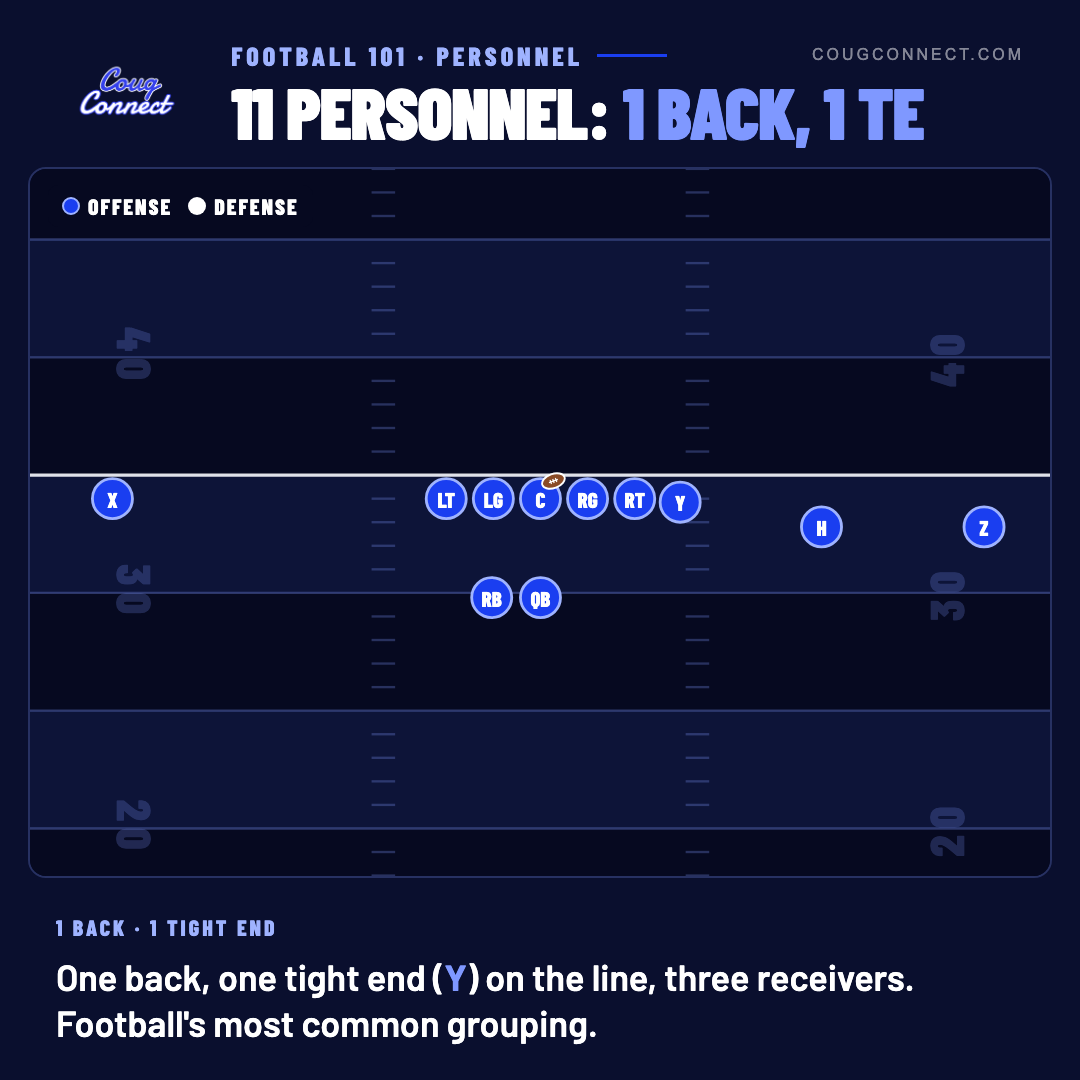
11 personnel: 1 back, 1 TE
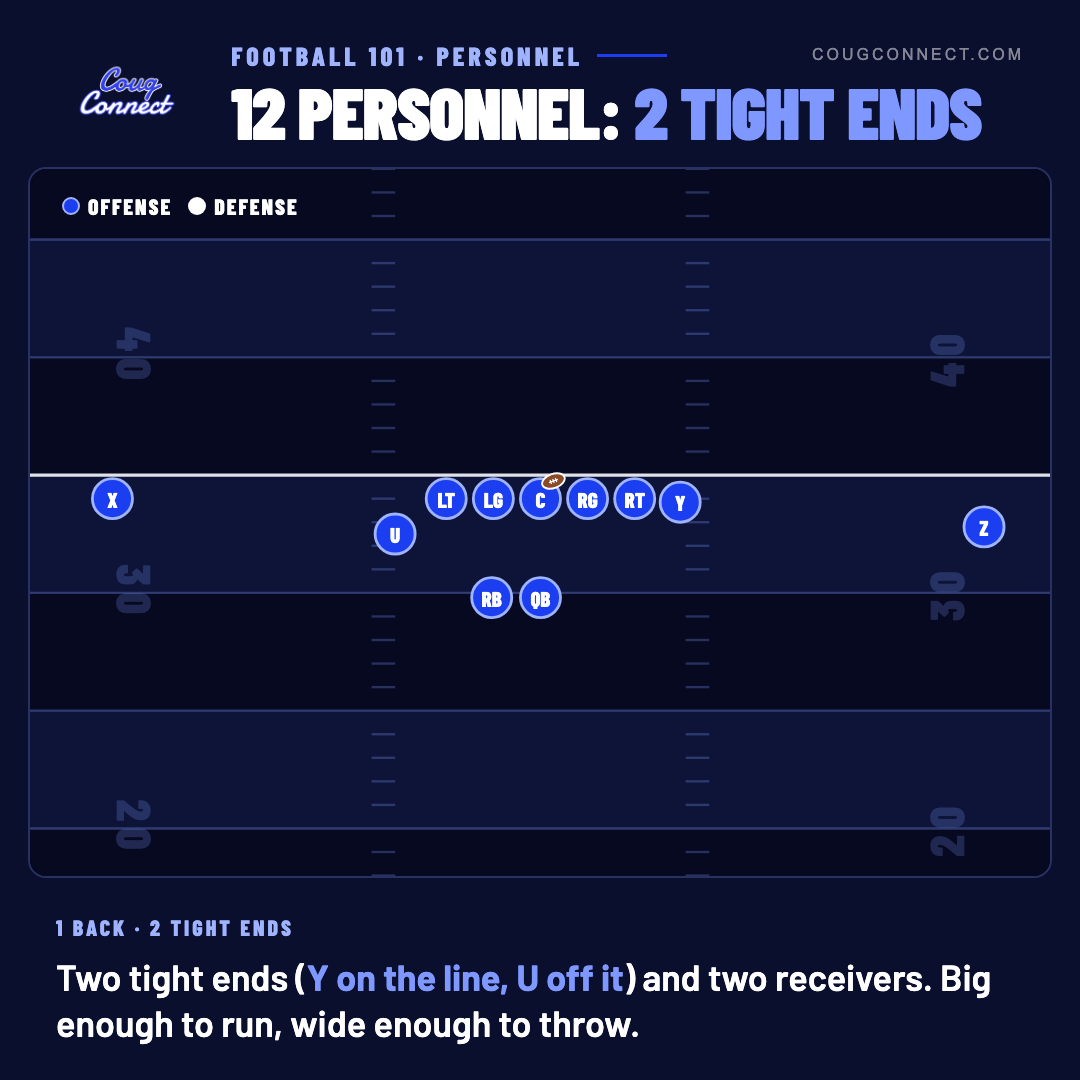
12 personnel: 2 tight ends
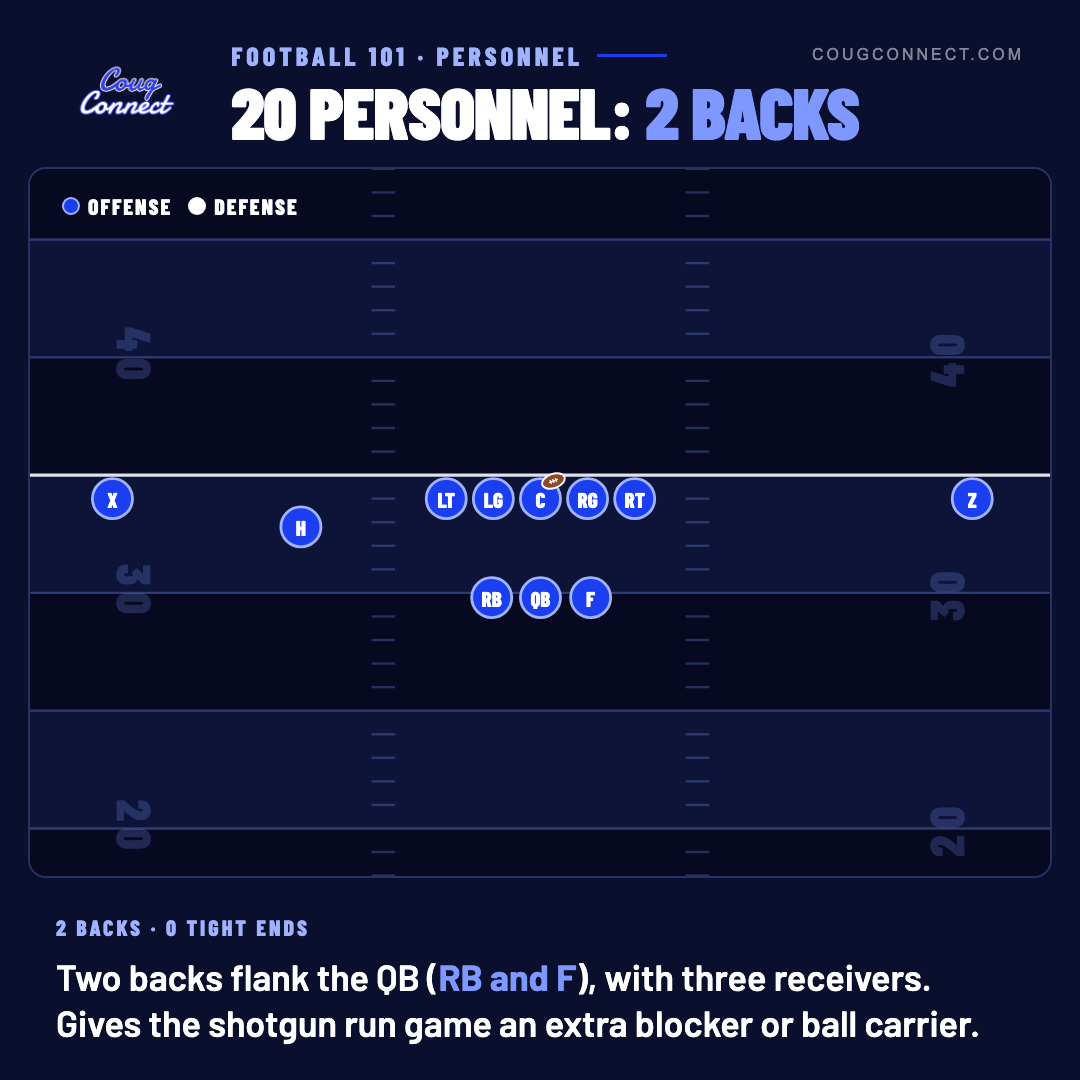
20 personnel: 2 backs
Film Room: an NFL example
Here is the same idea in a real NFL game, from the All-22 coaches film.
How it works
- 11 personnel = 1 back, 1 tight end, 3 receivers. The most common grouping in football.
- 10 personnel = 1 back, 0 tight ends, 4 receivers. Maximum spread.
- 12 personnel = 1 back, 2 tight ends, 2 receivers. Heavier, but the tight ends can still split out.
- 20 personnel = 2 backs, 0 tight ends, 3 receivers. Lets the offense run with an extra back in the shotgun.
Why it matters
Defenses substitute based on personnel. Spread teams like groupings that can line up big or wide without changing players, which keeps the defense guessing.
The counter
Defenses match with nickel (5 DBs) against 10/11 and base or bigger fronts against 12/20.
What to watch for: Before the snap, count the tight ends and backs. That tells you the personnel.
Also called: personnel