The red zone: a compressed field
Inside the 20, the field behind the defense shrinks and the end line becomes an extra defender. Deep throws disappear, defenders can play tighter, and offenses lean on fades, back-shoulder throws and rub routes.
The back-shoulder fade
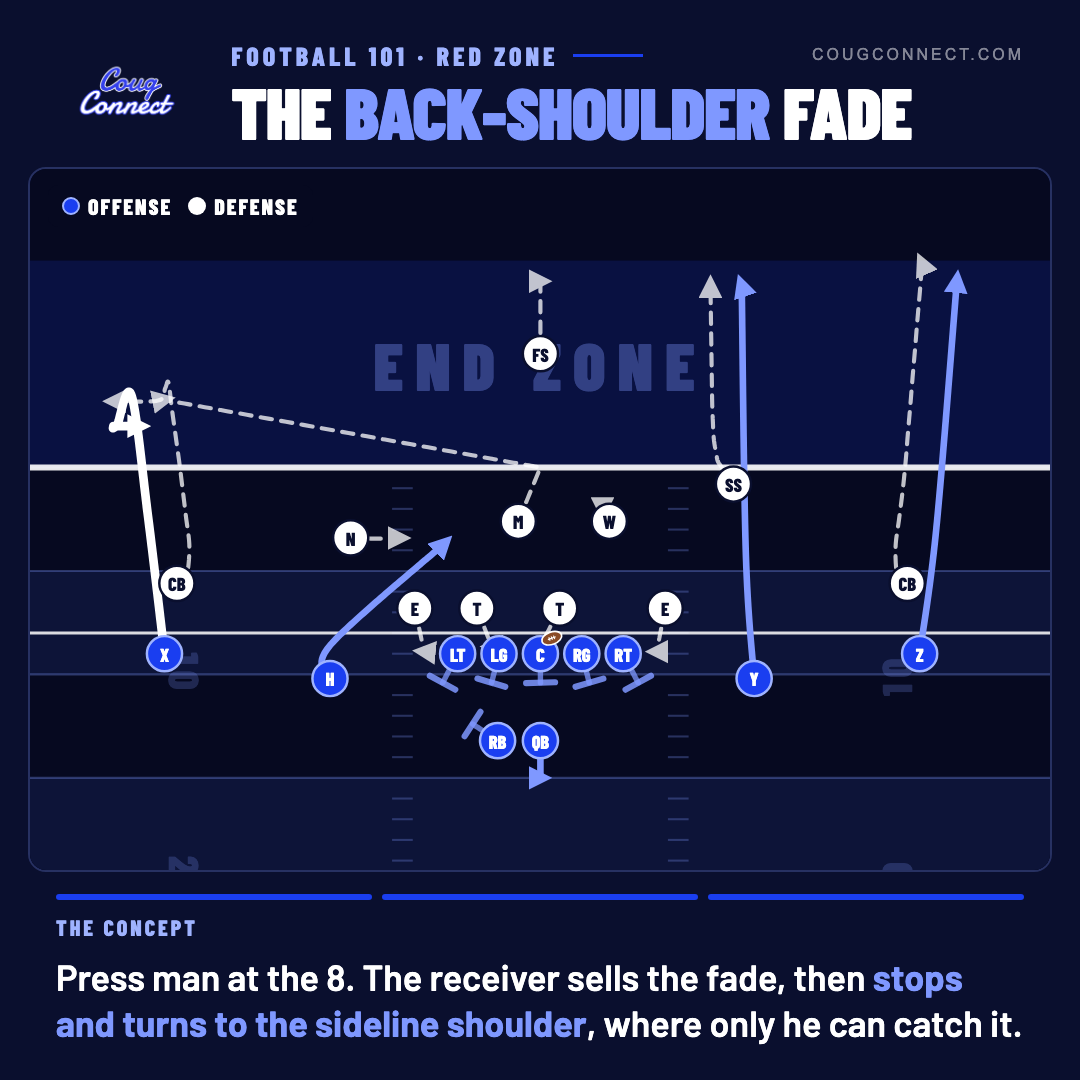
- Pre-snap: Ball at the 8. The corners press: man coverage, no room to play deep.
- Sell the fade: The X releases outside and runs at the end zone. The corner turns and runs with him.
- Back shoulder: He stops and turns back to the sideline. The ball is already on its way.
Goal-line bunch
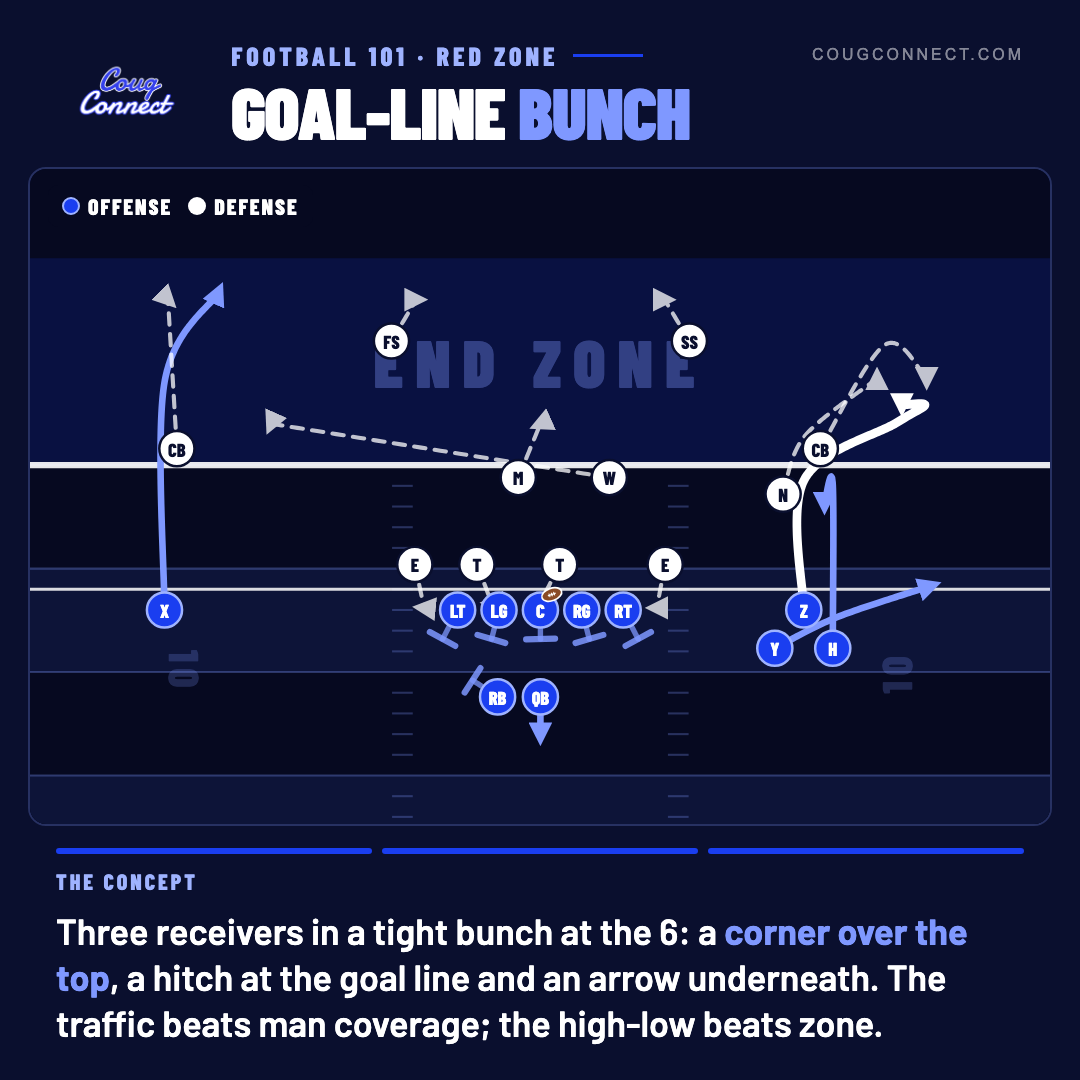
- Pre-snap: Ball at the 6. Three receivers bunched together on the right.
- Traffic: The point man breaks to the corner while the others cross underneath him.
- Corner: The corner route comes open over the top of the traffic.
How it works
- The end line limits how deep a route can go, so defenders can sit on routes and play tighter, often in press man near the goal line.
- Fade and back-shoulder fade: the receiver releases outside and goes vertical; on the back-shoulder version he stops and turns to the sideline shoulder while the corner keeps running.
- Rubs: two receivers cross so one defender gets screened. Defenses answer with “banjo” (take whoever releases into your area) or one pressing and one playing off.
- College rule: it’s not offensive pass interference on a pick if the receiver doesn’t make a separate blocking action, and in 2026 NCAA OPI dropped from 15 to 10 yards.
Why it matters
With no room to throw deep, offenses win with timing, leverage and traffic instead of speed.
The counter
Press man and banjo against rubs, “waterfall” flat defenders who gain depth, and squatting corners who take away the quick throws.
What to watch for: Inside the 10, watch whether the corners press or sit off, and whether two receivers start very close together.
Also called: red zone, low red, back-shoulder fade, rub, banjo