Well ladies and gentlemen, the 2026 season has started, the cupcakes have been eaten, and conference play for BYU begins this Saturday at 1:30pm local time. I genuinely mean no offense to Utah Tech, but this is the first week that we should see precisely what this BYU team is made of this year.
Since Arizona and BYU have been conference foes, BYU is 2-0 against the Wildcats. Of course we all remember the 41-19 smashing that took place in an eerily similar fashion to the 2024 KState massacre at LES in the middle 8. And I don’t know if anyone is going to be able to forget the storm-fueled nightmare that was the trip to Tucson last year and the 33-27 2OT victory that essentially solidified Cougar fans love for Bear Bachmeier.
We don’t really have a lot of data to go off for each team yet this season, as both teams took care of their FCS foes without too much to report. BYU looked fantastic, as we all expected. It was a fun game, but other than putting true freshman phenom Legend Glasker on the map and radar for all opponents moving forward, we didn’t really learn much that we didn’t already know or expect about our Cougs. Will we get the 2024 version of the matchup wherein the Cougs soundly handle Arizona? Or are these teams much closer than they appear and we end up with a slugfest trading blows and another OT thriller?
This team has declared that they have College Football Playoff and Conference Championship aspirations, so we are going to hold them to that standard from a stats perspective. This Arizona game will be a litmus test to that end.
Since we don’t have much to go off yet this season, let’s take a look at last year’s End of Season scorecards, review the prior two matchups between these teams, and get some keys for what to look out for or opportunities to exploit in this week 2 matchup that could already have CCG connotations. As always if you are not in the CougConnect Discord, you should be! Subscribe to CougConnect and come on in for more stats and game projections than you can read here.
What these teams were in 2025

It’s not wrong to say that BYU last season was the better team between the two, despite the close score in the 2OT game in Tucson. The metrics, efficiencies, and final results prove it. BYU finished the season 5-2 against P4 programs with 8+ wins on the season (including Arizona) and Arizona was 1-4 in the same category including the loss at the hands of BYU in October.
The biggest discrepancies at a glance in my opinion were BYU finished in the top 20 of FPI while Arizona finished in the top 30. BYU had a Top 10 Strength of Record with their 12-2 finish and an SOS of 29 while Arizona finished 9-4 (SOR #33) with the 63rd hardest schedule in the country. Arizona didn’t defeat a single P4 team who managed 9 wins in 2025. BYU had 4 such wins. Many of BYUs efficiencies measured in the top 20 while the Wildcats were closer to Top 30.
So what is the formula to beating Arizona?
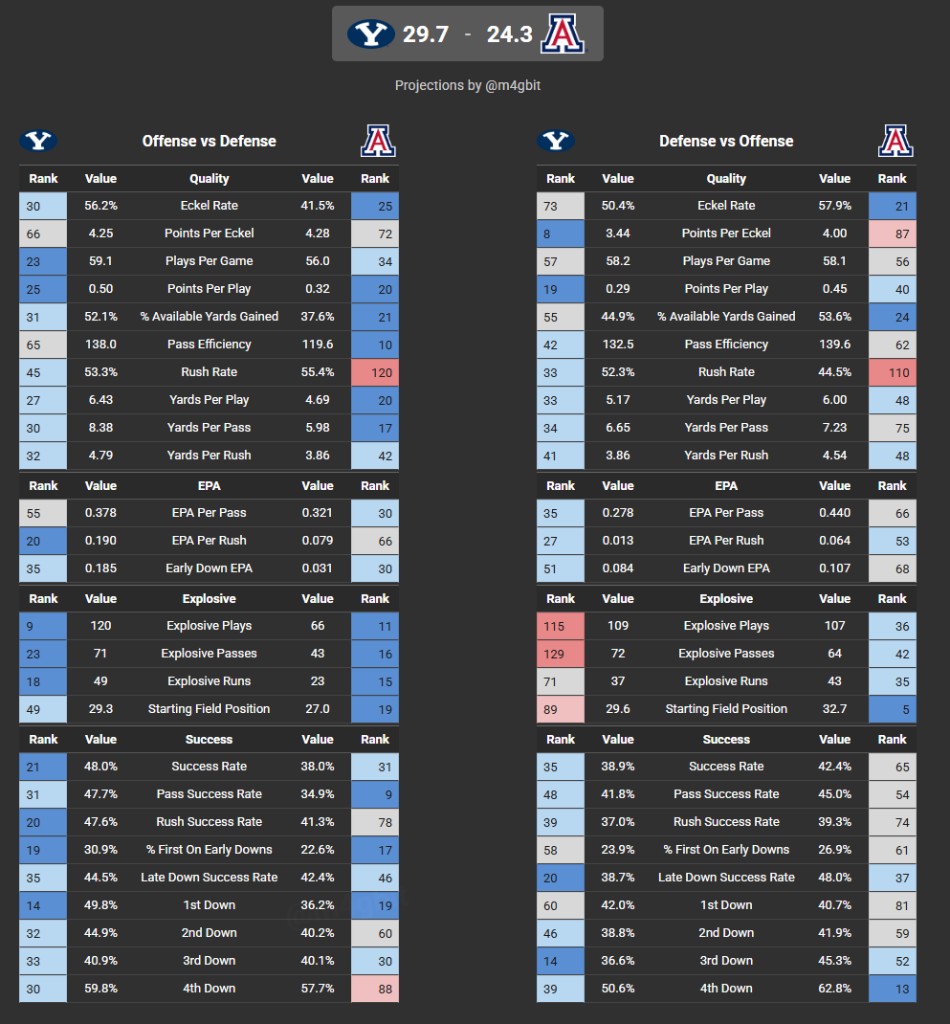
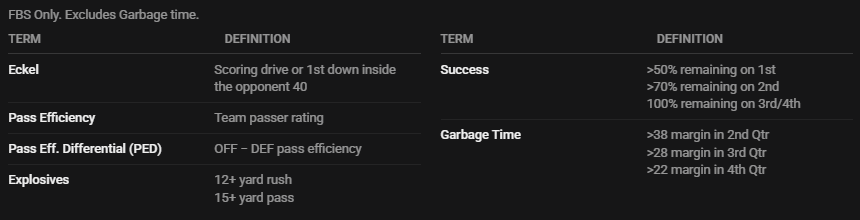
The head to head stat comparison above may or may not turn out to be accurate for these teams this year, but this is where both of these teams finished the 2025 season. The stats above take into account all plays by both teams against FBS opponents and are opponent adjusted.
The formula to beating Arizona? Well at a glance you may not see it. But BYU did a great job exploiting it last year. Rushing the ball. Opponents ran the ball against Arizona on 55.4% of their plays (#120 in the country) with an EPA/Rush that was good for #66 in the country. BYU in the same metric offensively finished the season #20.
The other interesting matchup comes down to one of my favorite metrics (or combination of metrics) the Eckel Rate and Points Per Eckel. While Arizona did well in 2025 at having quality drives (to the tune of #21 in the country offensively and #25 in the country defensively) they were pretty bad at punching it into the end zone themselves averaging 4 points per quality drive [Eckel Drive] offensively (#87) and allowing 4.28 Points Per Eckel defensively (#72). BYU’s offense managed 4.25 Points Per Eckel (#66) on a 56.2% Eckel Rate (#30) offensively but allowed a stellar 3.44 Points Per Eckel defensively (#8, and .84 Points/Eckel less than Arizona’s defense).

Rush success again may be the key to defeating this Arizona team. Last year BYU was 100% successful at converting rushing plays against the Wildcats that were under 4 yards to go regardless of the down and had an overall success rate rushing the ball against Arizona of 51%. This roughly translates to: “On any given down, regardless of how far BYU had to go, it was better than a coin flip that they were going to have success”.
So what went wrong in Tucson last year?
Many people were absolutely ecstatic with how this BYU team came out the gates swinging and appearing to fire on all cylinders against Arizona in Tucson. At least the first 10 minutes of the first quarter led many to believe that we were going to see BYU come in and clean up quickly, picking up where they left off in 2024 and surging to a 14-0 score with a couple of back breaking explosive scores. Arizona managed a score of their own and then the weather came in.
Before the weather delay, BYU had a rush success rate of 72.7% and an overall success rate of 62.5% offensively. After the 80 minute weather delay, success plummeted for BYU with a 20% pass success rate in the 2nd quarter and an overall success rate of 36.8% offensively. Was the wind taken out of a surging BYU’s sails due to the weather? Did Arizona make some adjustments in the break that all but eliminated the BYU passing attack (that if you remember by this point was still not proven or really flexed)?
BYU made the adjustments they needed and clawed their way back from down 10 points in the 4th quarter to finish the game on 2 sheer-willpower TDs on the back and legs of Bear.
The Fifita Factor
I don’t think anyone can really argue at this point that Noah Fifita is a great QB. Over 65% completion percentage in his career and over a 3:1 Passing TD:INT ratio. So would you believe me if I told you that Fifita has never had a game against BYU in which he has had better than a 56% completion percentage? Well, it’s true. Noah Fifita had his 2nd worst completion percentage in the 2024 season against BYU at 50% (with 3 INT) and a 55.6% in 2025 at home.

BYU needs to keep finding a way to turn up the pressure to prevent Fifita from being a factor. I have a feeling that the nearly 65,000 juiced up Cougar fans in the stands on Saturday will contribute to that end. I witnessed a few turnover worthy throws against NAU last week on the arm of Fifita. Look for Fifita to have 2+ picks if we see BYU in the win column on Saturday evening.
Looking forward to 2026
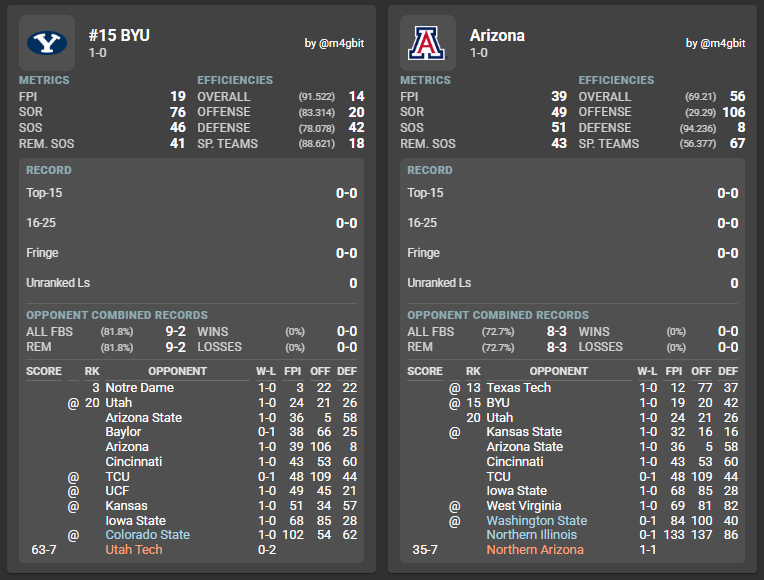
Arizona’s metrics jump off the page to me. FPI 20 spots lower than BYU’s. A chasm between offensive and defensive efficiencies through week 1. (Granted, there really is not a lot of data points to go off of. This is a combination of preseason expectations + results on the field). We all know that FPI discrepancy doesn’t mean you are guaranteed to beat a team, it’s really just a measurement of how many people you have coming back (and the production they contributed) and what your recruiting class looked like this early in the season.
So if that’s what goes into it, who did they actually bring back?
Returning starters isn’t always the most flashy of subjects, but it matters when score projections against a team shift this dramatically. BYU returns 5 offensive starters while Arizona brings back 6. But where the biggest differences will be made in my opinion is on the defensive side. BYU brings back 8 defensive starters while Arizona brings back half of that with 4. We’ve all seen how BYU’s defense has done the past 2 years with Jay Hill at the helm. We simply cannot know what it will for sure look like against conference foes until we start playing some conference games.
Well, they still played games week 1, what did their starting QBs do?
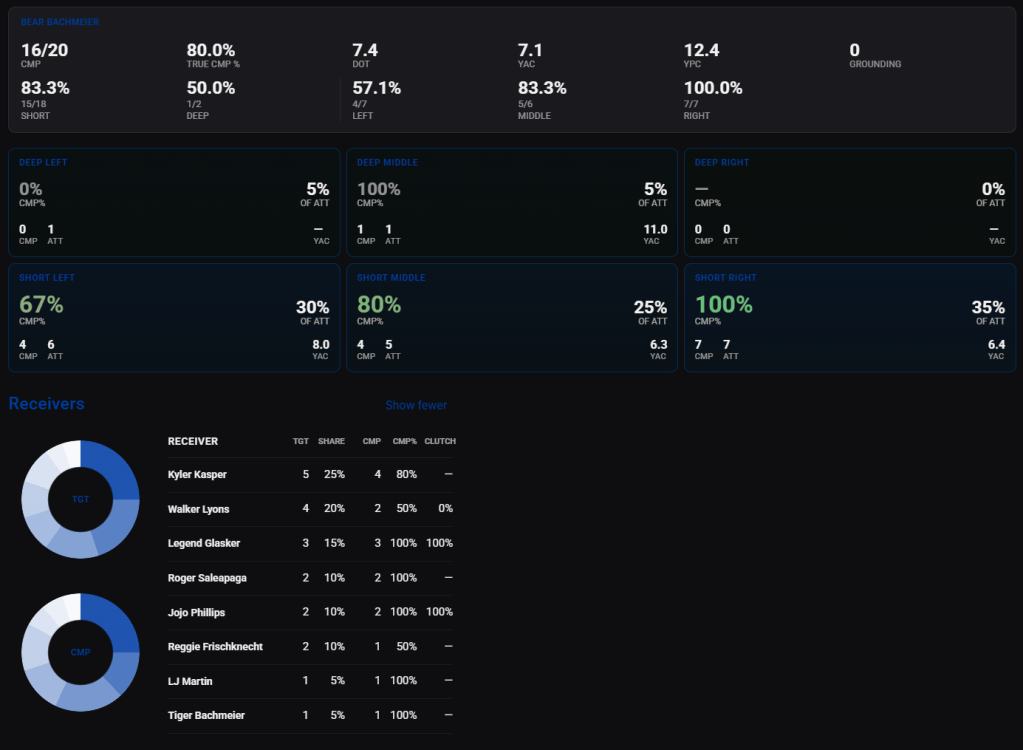
Taking a look at Bear’s passing distribution and stats can tell us that against Utah Tech, Aaron Roderick was not asking Bear to do anything that he wasn’t used to doing before. Efficient short passes that get out quick and are placed well enough to get his guys some YAC. Bear’s average passing depth of target against Utah Tech was 7.4 yards and he completed 80% of his passing attempts. Looking at this data I think gives us a little bit of insight into just who the guys are who will be the main factors in the BYU passing game this year. With 2 TE and 3 starting WRs catching at least 2 apiece and one of the most explosive week 1 performances we have seen from a Freshman in Legend Glasker.

Nothing on Noah Fifita’s card really stands out to me except for the 25% completion percentage over the short middle. This is the area of the field that BYU’s ball hawk defense who is #1 in the country on interceptions since the start of the 2024 season will have a field day if Fifita is struggling with accuracy.
So what do I think we need to see Saturday?
I really like this matchup for BYU. Arizona has had a difficult time matching BYU on the field in the 2020s. Nothing that I have seen so far leads me to believe that there will be tremendous change in that. That being said, I don’t think we can count on an automatic win here. Arizona has shown that they are opportunistic and can make it closer than BYU fans want it to be. I do think they will have a hard time doing that on hostile turf.
But here are my keys:
- RUN INTO THE MATCHUP
Arizona finished #78 in Rush Success allowed and BYU is returning the Big 12 offensive player of the year in LJ Martin and Air Bear himself, the duo who gashed Arizona for 250 on the ground in Tucson. I don’t anticipate at first that BYU will spend the afternoon testing Bears arm against arguably the most-talented part of Arizona’s defense. - FINISH YOUR QUALITY DRIVES
I have talked in prior previews about performance metrics I believe are vital to determining who the teams are that can actually compete at the top level of this sport in today’s day and age. BYU has beaten Arizona while averaging 4.3 and 4.7 points per quality drive while holding Arizona to 3.2 and 3.9. Finishing with TDs instead of field goals is what separates the elite teams from the great teams from the good teams. BYU has been historically pretty solid at this metric. But if this team truly has CFP aspirations, they need to take care of the little things to find themselves in the top 10 of this metric. - DO NOT LET THE GAME GET WONKY
The crowd will be juiced for this game. Take care of the ball and avoid a flat stretch after a quick start, or worse (a hole we fell into way too frequently last season) getting behind by 1-2 scores early before “waking up” and needing to come back to win the game in dramatic fashion. It is possible for BYU to simply play like they did in the 2nd half of many of these games and just refuse to let your opponents score much. We just need to see it. We think we know what they are capable of.
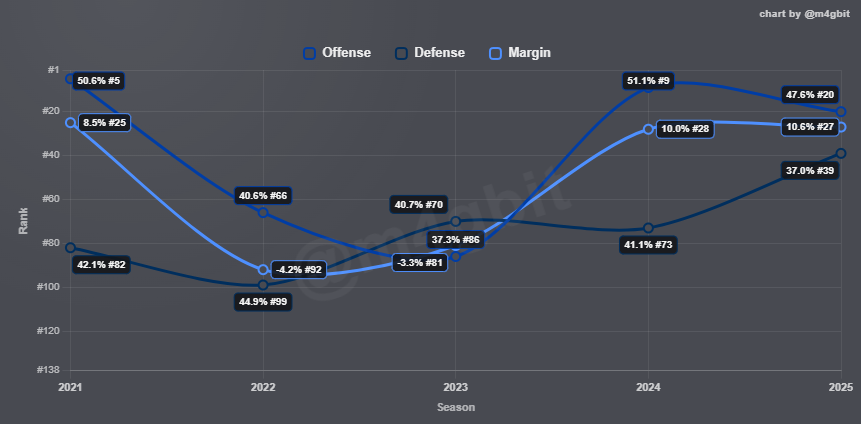
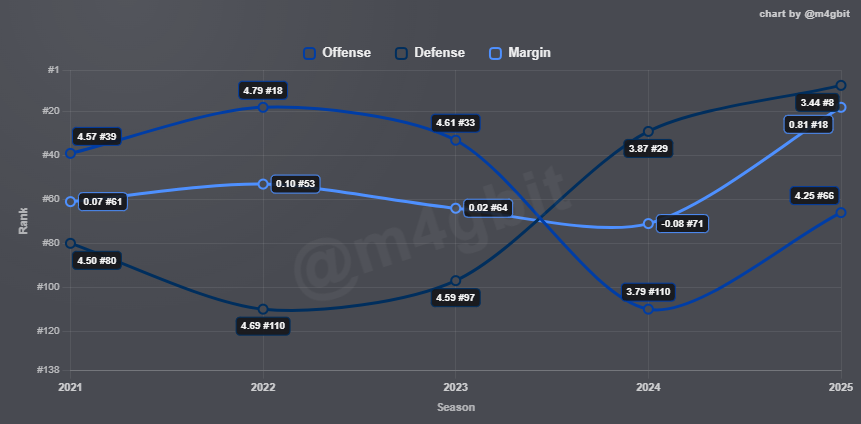
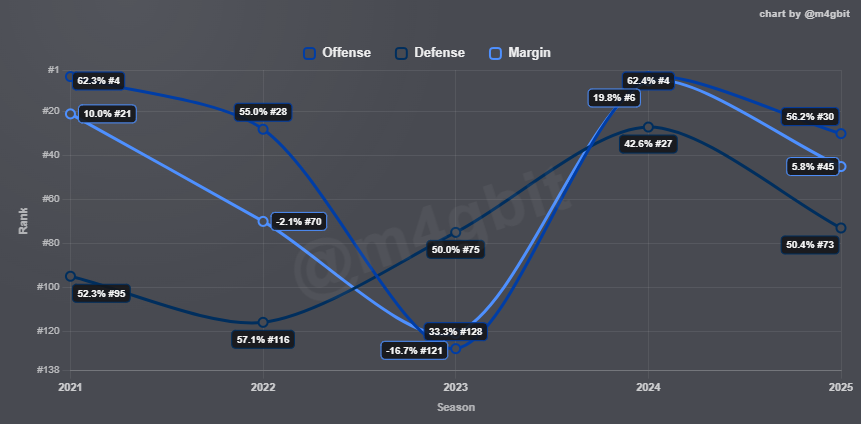
I am not ready to call Arizona the #106 offense or the #8 defense after one single FCS game, but I do think we know the recipe for what will work against them. It helps that we have a literal tank at RB1 and a QB who wouldn’t even have to change his number to suit up in the backfield alongside that tank, and is a machine in his own right.
I am looking forward to the first conference game at LaVell’s house in the 2026 season. You can find me on X/Twitter @m4gbit and hanging out in the CougConnect Discord. Reach out if you have questions or want to see more stats just like this. Subscribe to CougConnect if you haven’t already and come hang out with the best community of Cougar fans on the internet!